Diving is one of the most exhilarating. An Selecting Wetsuit: A Complete Guide to Selecting the Right Diving Wetsuit (Types, Materials & Maintenance)
Diving is one of the most exhilarating and rewarding water sports. allowing adventurers to explore the stunning beauty of the underwater world.
However, selecting the right diving wetsuit—and mastering the art of Selecting Wetsuit that fits your needs—is absolutely crucial for guaranteeing diving safety, thermal comfort and overall enjoyment during every dive. A high-quality diving suit does far more than just keep you warm; it also acts as a protective barrier against jellyfish stings, sharp corals, rocky surfaces and other potential hazards from marine life and underwater environments. This comprehensive guide will break down the key details you need to know for successful Selecting Wetsuit, including the main types of diving suits, top materials used, how to pick the perfect thickness, and essential maintenance tips to extend the lifespan of your gear. Whether you’re a beginner diver or a seasoned underwater enthusiast, this article will help you pick the most suitable diving wetsuit for your next adventure.
Selecting Wetsuit: Types of Diving Suits to Choose the Best One for You
Diving suits are designed to meet different water temperature conditions and diving needs, and they are mainly divided into three core categories. Understanding the differences between each type is the first step to making a smart Selecting Wetsuit decision. Each category caters to specific diving scenarios, so knowing their strengths will help you narrow down your options efficiently.
1. Standard Wetsuit (Most Popular for Recreational Diving)
The traditional wetsuit is the top choice for recreational divers and casual diving enthusiasts worldwide. It works by trapping a thin layer of water between the suit’s inner surface and your skin; your body heat then warms this thin water layer, creating an effective thermal barrier to keep you comfortable underwater. Wetsuits are flexible, affordable and perfect for mild to moderately cool tropical and temperate waters, making them ideal for most casual diving trips.
2. Drysuit (Best for Cold Water Diving)
A drysuit features a fully sealed design that prevents any water from seeping inside, keeping your body completely dry throughout the dive. This advanced design delivers superior insulation, making it the optimal pick for diving in frigid cold waters, deep diving, or long-duration diving expeditions. Drysuits are also a great option for divers who prioritize maximum warmth and dryness, though they are typically more expensive and require basic training for proper use.
3. Semi-Drysuit (Middle Ground for Versatile Diving)
As the name suggests, a semi-drysuit sits between standard wetsuits and drysuits, combining the best features of both. It has enhanced sealing details to minimize water entry, offering better thermal insulation than a regular wetsuit while remaining more flexible and affordable than a full drysuit. This type is perfect for divers who frequent waters with mild to cool temperatures and want a balance of comfort, warmth and value.
Selecting Wetsuit: Best Materials (Neoprene vs. Synthetic Fabrics) for Your Diving Suit
The material of a diving wetsuit directly affects its insulation performance, flexibility, durability and comfort—key factors to consider when Selecting Wetsuit. The vast majority of diving suits on the market are made from two primary materials, each with unique advantages that align with different diving needs.
Neoprene (Most Common Insulation Material)
Neoprene is the gold standard material for diving wetsuits, thanks to its exceptional thermal insulation, high elasticity and shock absorption properties. High-quality neoprene fits snugly against the body without restricting movement, retaining heat efficiently even in cooler waters. It is the go-to material for full-performance wetsuits suitable for most diving scenarios, from shallow tropical dives to temperate water exploration.
Synthetic Composite Materials
Synthetic fabric diving suits are lightweight, quick-drying and highly durable, with strong resistance to wear and tear. These suits are specifically designed for warm tropical waters, long-term diving trips or frequent diving sessions, as they offer lightweight comfort without unnecessary bulk. They are also easy to pack and maintain, making them a practical choice for travel-friendly diving gear.
Selecting Wetsuit: How to Choose the Right Thickness for Diving Conditions
Wetsuit thickness is the most critical factor that determines its thermal efficiency, and it must be matched closely to the water temperature of your diving location—another non-negotiable aspect of Selecting Wetsuit. Thicker suits provide more insulation, while thinner suits offer greater flexibility for warm waters. Here’s a quick breakdown of common diving wetsuit thickness options and their ideal uses:
- 3mm wetsuit: Perfect for warm tropical waters (above 24°C/75°F), ideal for snorkeling and shallow recreational diving
- 5mm wetsuit: Suitable for temperate waters (18°C to 24°C/64°F to 75°F), the most versatile thickness for year-round recreational diving
- 7mm wetsuit: Designed for cooler waters (10°C to 18°C/50°F to 64°F), delivers enhanced warmth for longer dives in lower temperatures
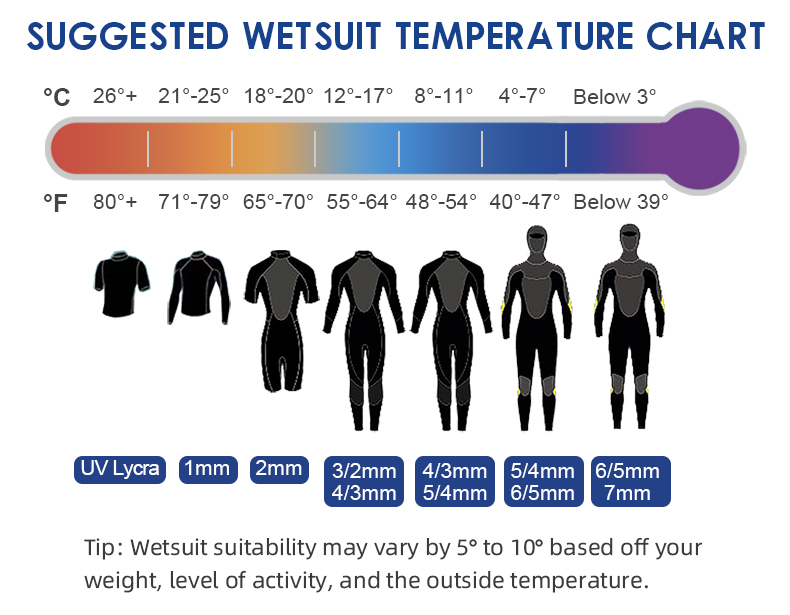 Comparison table of diving suit thickness and temperature
As a general rule: the colder the water temperature, the thicker the diving wetsuit you need to stay comfortable and safe.
Selecting Wetsuit: Key Factors to Choose the Perfect Diving Wetsuit for You
Beyond types, materials and thickness, there are a few essential factors to consider to ensure your diving wetsuit fits your unique needs—final touches to perfect your Selecting Wetsuit process:
- Diving Site Water Temperature: Always check the average water temperature of your destination first to pick the correct thickness and suit type.
- Dive Duration: Longer diving sessions require better insulation, so opt for a thicker or higher-insulation suit for extended underwater time.
- Personal Cold Sensitivity: If you tend to feel cold easily, choose a thicker wetsuit or add layering options for extra warmth.
- Diving Activity Type: Free diving and spearfishing require lightweight, thin wetsuits for maximum mobility. while deep diving or cold water diving calls for heavy-duty insulation.
Selecting Wetsuit: Essential Maintenance Tips to Extend Your Diving Wetsuit Lifespan
Proper maintenance is key to keeping your diving wetsuit in top condition, preserving its elasticity and insulation, and avoiding premature damage—an often-overlooked step after Selecting Wetsuit. Follow these simple steps after every dive to extend your gear’s lifespan:
- Rinse Thoroughly: Rinse the entire wetsuit with fresh, clean water immediately after every dive to remove saltwater, sand, chlorine and marine impurities.
- Air Dry Properly: Hang the wetsuit in a cool, shaded, well-ventilated area to dry completely. Avoid direct sunlight, as UV rays can damage neoprene and cause fading or cracking.
- Store Correctly: Store your wetsuit flat or hung on a wide hanger in a dry space; never fold it tightly, as this can create permanent creases and damage the insulation layer.
- Regular Inspections: Check the suit regularly for small tears, worn seams or damaged seals, and repair minor issues promptly to prevent further damage.
Selecting Wetsuit: Final Tips to Choose the Best Diving Wetsuit for Safety & Comfort
Selecting the correct diving wetsuit is one of the most important decisions for any diver, as it directly impacts your safety, comfort and overall diving experience.
Mastering Selecting Wetsuit by considering the water temperature, diving style, personal preferences and proper maintenance will help you find a high-quality wetsuit that lasts for years and enhances every underwater adventure.
Whether you’re shopping for your first wetsuit or upgrading your diving gear, this guide will help you make a confident and informed choice.