Building a water‑sports brand or scaling wholesale wetsuit lines starts with picking the right wetsuit manufacturer. Many buyers face quality inconsistency, missed lead times or hidden costs when sourcing overseas.
This practical sourcing guide walks you through every critical step. You will learn what to verify before signing contracts, what red flags to avoid, and how to evaluate real‑world factory capabilities. Whether you run a small startup or a large retail brand, these rules apply to OEM, ODM and private‑label projects.
Define Your Sourcing Requirements First
Before reaching out to any wetsuit manufacturer, clarify your core project parameters. Vague requests lead to wrong quotes and unsatisfactory samples.
Answer these key questions internally:
- Product range: Surfing, diving, spearfishing or rental‑grade wetsuits? Specify neoprene thickness (1.5 mm‑7 mm).
- Order model: OEM (your designs), ODM (modify existing styles), or ready‑made wholesale stock.
- MOQ expectation: Confirm minimum order quantity for prototypes and bulk production.
- Target markets: EU, North America or other regions. Different markets require different compliance certifications.
- Budget & timeline: Set sample lead‑time and mass‑production deadlines.
When your brief is clear, a qualified wetsuit manufacturer can deliver accurate quotations and realistic timelines. SHANGCHENRUI (SCR) recommends preparing a simple specification sheet for all supplier communications. It cuts back‑and‑forth emails and speeds up project kick‑off.
Where to Search for Qualified Wetsuit Manufacturer Partners
Multiple channels help you shortlist potential factories. Each has pros and cons.
Global B2B Marketplaces
Platforms like Alibaba connect global buyers with Asian wetsuit manufacturers. Filter results by verified factory status, production capacity and export records. Do not rely only on platform badges. Always validate factory backgrounds independently.
Industry Exhibitions
Water‑sports trade shows let you touch physical samples and speak directly with factory representatives. You can compare material quality, workmanship and customization capacity face‑to‑face.
Referrals & Industry Networks
Ask other water‑sports brand owners for trusted supplier referrals. Word‑of‑mouth recommendations filter out many unreliable middlemen.
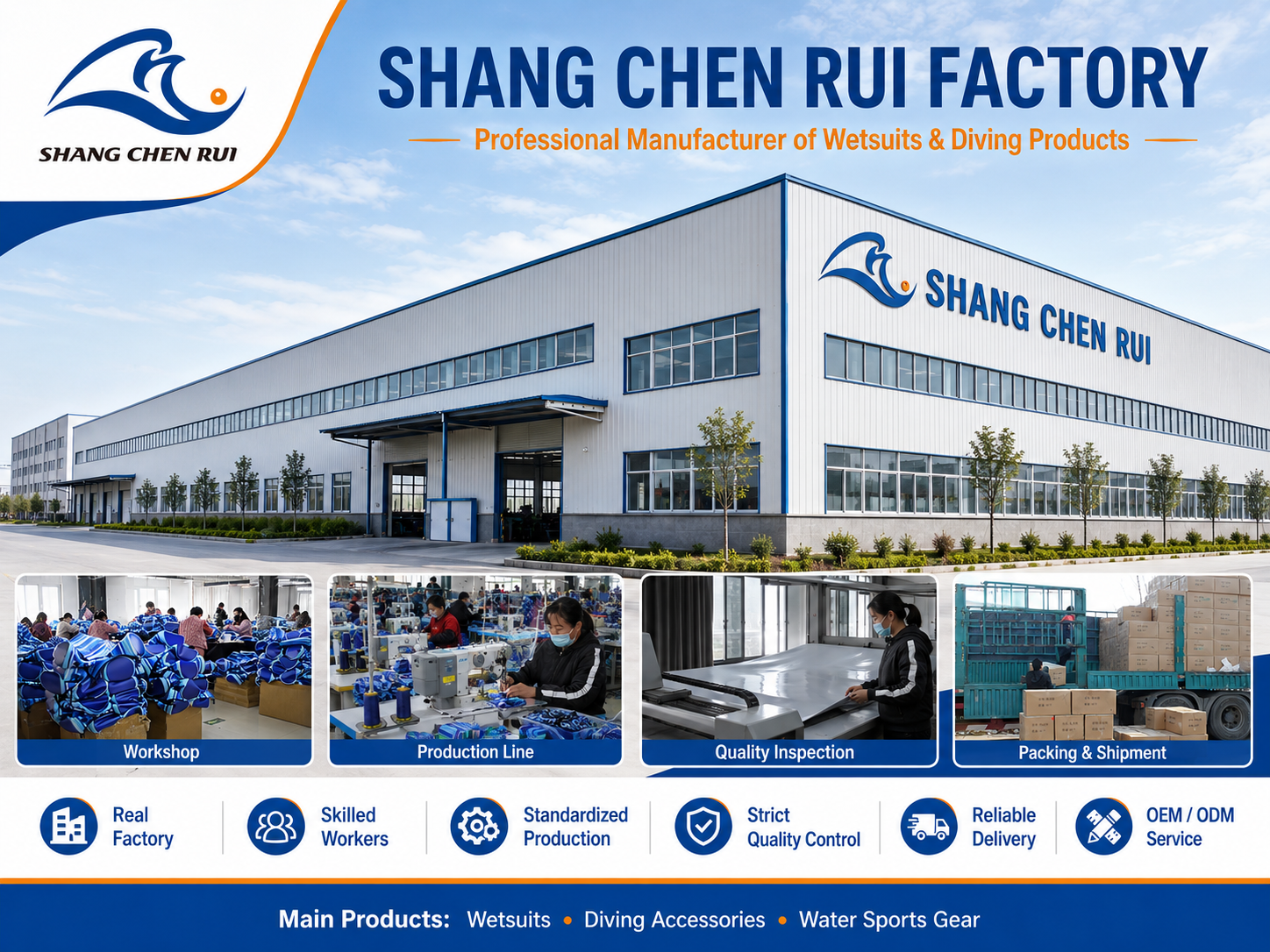
Note: Distinguish real factories from trading companies. Trading firms add extra layers and may lack direct control over production quality. Direct cooperation with a wetsuit manufacturer usually brings better cost control and technical support. SHANGCHENRUI (SCR) is a direct factory, offering full‑chain services from neoprene material processing to finished‑wetsuit delivery.
Core Evaluation Criteria for a Trusted Wetsuit Manufacturer
Once you build a shortlist, assess each candidate against these practical standards.
Material & Production Expertise
Wetsuit performance heavily depends on neoprene quality. Ask suppliers to share material certificates. Reputable wetsuit manufacturers can provide documentation for neoprene grades, stretch performance and water‑absorption data.
Check seam craftsmanship: glued blind‑stitched (GBS), taped seams and flat‑lock seams serve different use scenarios. A capable factory can match seam solutions to your product positioning.
Customization Capacity (OEM / ODM / Private Label)
Confirm if they support custom patterns, logo printing, size adjustments and packaging. Some factories only produce standard ready‑made items. They cannot handle private‑label modification.
SHANGCHENRUI (SCR) supports full‑scale OEM and ODM services. The team works with buyers on pattern development, sample iteration and custom branding for surf, dive and spearfishing wetsuits.
Quality Control System
Ask about their QC workflow. Reliable wetsuit manufacturers carry out multi‑stage inspections: raw‑material check, mid‑production spot‑check and final finished‑product inspection. Request sample inspection photos or short‑video factory tours.
Compliance Certifications
Different target markets enforce strict rules for neoprene apparel. Common certifications include REACH, ISO, BSCI and OEKO‑TEX. If you sell children‑size wetsuits, extra product safety documents are required. A qualified wetsuit manufacturer should provide valid certification copies upon request.
H3: MOQ, Lead Time & Scalability
Match MOQ with your business scale. Some large‑scale factories set high minimum orders. Small‑batch startups need flexible‑MOQ partners.
Confirm sample lead‑time and mass‑production cycles. Also check whether the factory can expand output for seasonal demand spikes. This avoids stock shortages during peak selling seasons.
Practical Sourcing Workflow: From Sample to Bulk Order
Follow this workflow to reduce sourcing risks when cooperating with your chosen wetsuit manufacturer.
- Send your detailed spec sheet, get formal itemized quotations. Reject vague lump‑sum quotes without cost breakdown.
- Place sample orders first. Test material feel, fit, seam tightness and printing quality. Do not jump straight to large‑volume production.
- Confirm sample approval in written form. This serves as the benchmark for bulk‑order quality.
- Sign a formal contract. Clarify quality standards, delivery date, payment terms and after‑sales rules.
- Arrange pre‑shipment inspection before goods leave the factory. You can assign third‑party inspectors or ask the wetsuit manufacturer to provide batch‑check records.
SHANGCHENRUI (SCR) follows this standardized process for every new‑client project. It helps overseas buyers lower defect rates and prevent costly order mistakes.
Common Red Flags When Selecting a Wetsuit Manufacturer
Watch for these warning signals. They often point to unreliable suppliers.
- Giving extremely low prices far below market average. Low cost usually comes with downgraded neoprene material or simplified workmanship.
- Refusing to provide factory‑visit video or real‑workshop evidence.
- Unable to supply material test reports or market‑required compliance certificates.
- Vague sample lead‑time and repeatedly delaying prototype delivery.
- Avoiding written contracts, pushing for full advance payment before sample confirmation.
If you spot multiple red flags, cross this supplier off your shortlist, even if the price looks attractive. Poor‑quality wetsuits trigger product returns and damage your brand reputation.
Why SHANGCHENRUI (SCR) Stands Out as a Wetsuit Manufacturer
SHANGCHENRUI (SCR) is a direct‑source wetsuit manufacturer based in Shandong, China, a well‑known neoprene‑product industrial base. It serves global water‑sports brands, wholesalers and retailers with integrated OEM & ODM solutions.
Key strengths include:
- In‑house production control: The factory supervises the whole workflow from neoprene material cutting, sewing to finished‑product QC. It avoids quality drift caused by outsourced subcontracting.
- Rich customization capability: Covers surfing, diving, spearfishing and rental‑use wetsuits. Supports custom thickness, pattern, logo and packaging for private‑label projects.
- Complete compliance documentation: Provides required certifications for EU, North‑American and other global markets, helping buyers clear customs smoothly.
- Flexible order support: Balances small‑batch trial orders and large‑volume bulk production. Stable lead‑time arrangements fit seasonal sales cycles.
- Dedicated account team: Multilingual business support for smooth communication throughout sampling, production and shipment.
Many overseas buyers choose SHANGCHENRUI (SCR) as their long‑term wetsuit manufacturer partner for stable quality and transparent cooperation.
Frequently Asked Questions About Sourcing a Wetsuit Manufacturer
What is the difference between OEM and ODM for wetsuits?
OEM means you provide designs, patterns and specifications; the wetsuit manufacturer produces strictly following your requirements. ODM means you select and modify existing factory‑developed styles to build your own product lines.
How long does wetsuit sample development take?
For most standard‑style wetsuits, sample cycles range from 7‑15 working days. Complex fully‑custom patterns need longer iteration time. Confirm timelines with your wetsuit manufacturer before starting.
Can I get small‑batch orders from a wetsuit manufacturer?
More factories now support small‑batch trial production for new‑brand clients. But unit costs will be higher than large‑volume bulk prices. Talk about MOQ clearly in early communication.
Finding the best wetsuit manufacturer shapes your brand’s long‑term success. Do not make decisions based purely on price. Evaluate material expertise, customization capability, QC systems and compliance together.
Define your requirements clearly, shortlist candidates methodically, test samples before bulk purchase, and stay alert to common supplier red flags.
For buyers seeking a reliable direct‑source partner, SHANGCHENRUI (SCR) delivers end‑to‑end OEM & ODM wetsuit manufacturing solutions for global clients. With proper due diligence, you can build stable, profitable supply‑chain cooperation.